
Recording guide
Archival audio preservation
Keep a faithful preservation copy, make listening improvements on a separate version, and retain the records that connect both to the collection.
The short answer
Key takeaways
- Choose and document the best available source before processing. A later copy may have different damage or transfer quality.
- Keep subjective cleanup out of the preservation master. Record restoration decisions on a separate working version.
- Retain identifiers, source context, technical information and processing history with the files.
- Check copies against saved checksums, and check the recording itself. Matching bytes do not establish that an earlier transfer captured the right content.
Archival audio preservation gives collection managers a retained reference for their sound recordings and a documented route to useful access copies. An archive needs to answer two questions: what was on the recording, and what was changed to make it easier to use? A quieter file alone cannot answer both. Plan the original, preservation master and access versions together before starting restoration.
The US National Archives distinguishes preservation copies, kept for the long term, from access copies used for research and programming. That distinction gives a collection a stable reference while allowing a separate version to serve today's listener.
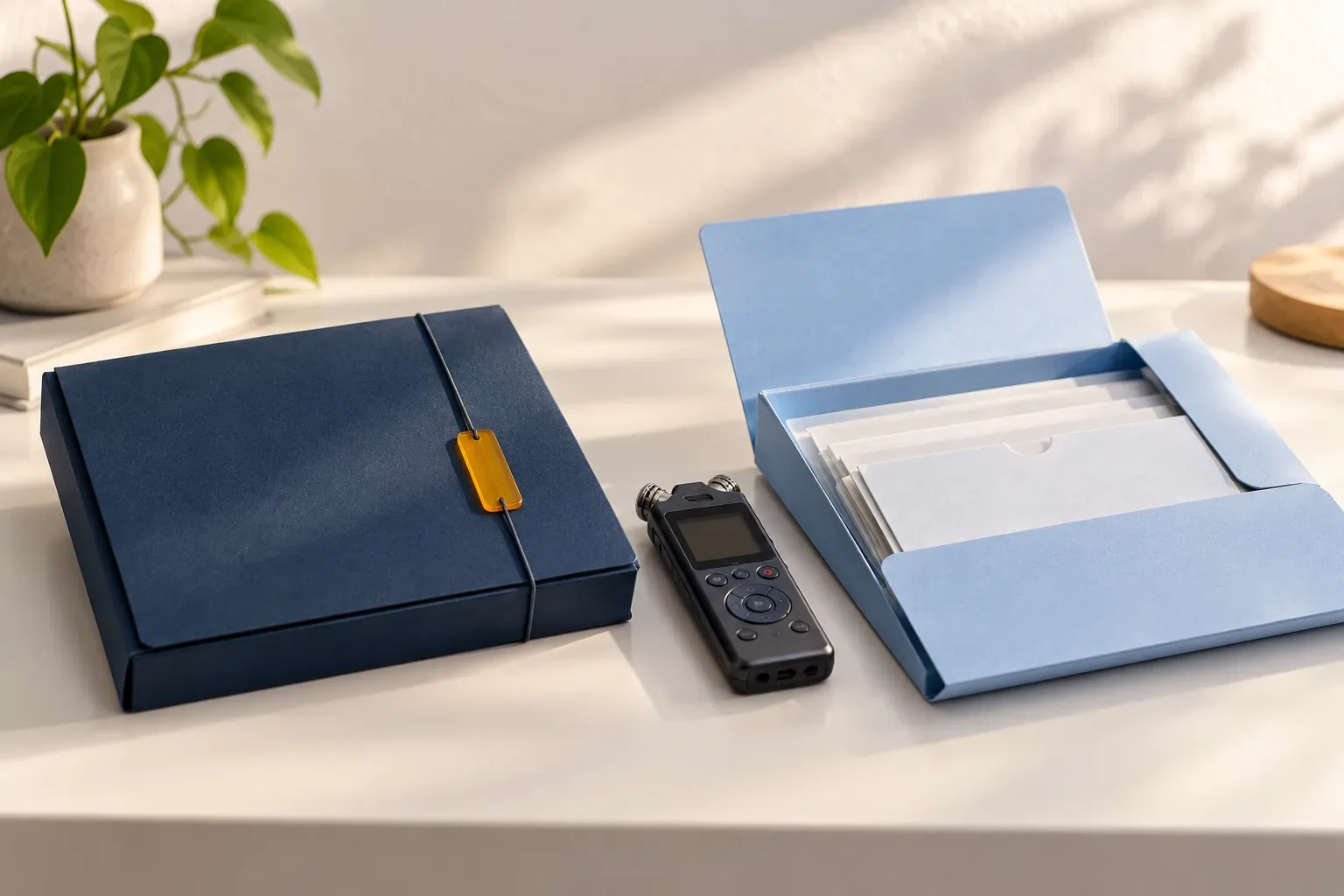
Keep the versions distinct
The source is the recording you received: a physical carrier or an existing digital file, together with labels, notes and other context. Record which item it is and where it came from.
The preservation master is the archive's retained reference. For an analogue recording, this usually follows a carefully documented transfer. IASA's preservation principles call for the closest possible surrogate and advise against subjective improvements during that transfer. Necessary replay decisions still require specialist judgment and documentation. State whether the transfer is intended to capture the recorded content or document a historical playback experience. In CCAHA's audio preservation demonstration, the machine and horn contribute to the sound, showing why that choice matters.
A restoration or production version is a separate file used to make listening changes. An access copy can then be created in a format suited to the intended player, website or researcher. An archive may keep additional intermediate versions; names vary, so define the role of each file in your own policy.
The Canadian Heritage Information Network's digitization guide separates its preservation, production and access files. The useful distinction is their purpose, rather than a particular filename prefix.
The preservation master stays separate from listening changes.
Sources: IASA-TC03; NARA; CHIN. Recommended roles,not a measured restoration result; exact version names vary by institution.
Choose the source before cleanup
Make an inventory before treating the collection as one restoration job. Record the item identifier, format, apparent condition, duration if known, available copies and playback requirements. Keep packaging and accompanying information associated with the correct item.
IASA recommends selecting the best available copy before reformatting. Compare provenance and transfer quality as well as physical condition. A clean-looking duplicate may contain a poorer earlier transfer; a familiar filename does not prove that it is the earliest or most complete version.
For existing digital audio files, retain the received file. Converting an MP3 into WAV does not recreate the information already removed by lossy encoding. A preservation plan can retain the original alongside a supported derivative without treating conversion as a quality improvement.
Prioritize the collection
Plan the queue around the collection's policy and actual risks. IASA identifies deterioration and playback obsolescence as important priorities. The CHIN guide also starts with selection and condition assessment rather than processing every item in an arbitrary order.
Separate three decisions:
- What is at risk? Identify unstable or damaged carriers and formats for which suitable playback is becoming difficult.
- What is needed? Record the collection value, available duplicates and specific access request.
- What can be handled safely? Confirm equipment, skills and storage before scheduling transfer.
If a tape is shedding, mouldy, sticking, damaged or squealing, obtain appropriate conservation or transfer advice before further playback. This guide does not provide a cleaning, baking or physical repair recipe. NARA emphasizes that high-quality reformatting needs suitable equipment and specialized knowledge.
Specify and document the transfer
Before preservation reformatting, agree the format and recording settings with the archive or transfer specialist. For digitizing analogue audio, CHIN recommends linear PCM in BWF, with WAV also acceptable. Settings should follow the collection's policy and the source; they are not a reason to resample every received digital file.
Keep a record of the carrier, chosen copy, replay and capture equipment, operator, settings, date and known problems. Identify channel assignments and retain the relationship between separate sides or parts. Distinguish the historical recording date from the date a digital file was created.
FADGI's Broadcast WAVE metadata guidance provides fields for the responsible organization, identifiers, descriptions and file creation information. Embedded fields can help a file remain identifiable, but they do not replace the collection record and linked documentation. Check what survives each export.
Sources: IASA-TC03; CHIN; FADGI. Association lines mean documented relationships,not causation or a mandatory metadata schema.
Restore a working copy
State the listening goal before choosing effects: an interview passage for a researcher, a programme for public listening, or a performance for an access service. Use a short representative passage to assess whether a treatment helps that goal without removing wanted detail.
Compare the processed copy with the retained reference at a similar listening level. Check speech consonants, quiet voices, musical transients, pauses and background context relevant to the item. Listen for new artifacts as well as reduced noise. Keep unresolved words uncertain; a cleaner-sounding result is not evidence for a guessed quotation.
Record the software and version, processing order, settings and affected passages. If you make cuts, level changes or other editorial alterations, label that derivative accordingly. Keep a route back to the unmodified reference. The restoration version should never silently become the only surviving copy.
Verify the files and keep them usable
Quality control has separate content and file-integrity jobs. CHIN's review checks include matching collection numbers to filenames and audio, checking beginning and ending content, and reviewing technical metadata. Also confirm the intended channels and parts are present before accepting the handoff.
For file integrity, save a checksum when a file enters the managed collection and compare it after copying and during scheduled checks. The Library of Congress explains that whole-file and audio-data checksums can answer different questions: changing embedded metadata can change a whole-file checksum even when the audio data is unchanged.
Record the scope of each check. A checksum match against a trusted earlier value supports byte integrity for that comparison. It cannot establish who originally spoke, whether the recording was edited before receipt, or whether a transfer omitted a side.
- Saved file + trusted digest
- Copy without changing bytes
- Compare with the saved digest
Investigate an unexpected mismatch.
- Retained reference
- Document intended changes
- Save a new digest + version relationship
A different whole-file digest is expected when bytes change.
Sources: IASA-TC03; Library of Congress. Conceptual workflow; no example hash is a real collection measurement. A checksum cannot establish earlier recording history or listening completeness.
Long-term management continues after a file has been created. NARA calls for managed storage, regular checking and backups. Keep preservation copies separately from everyday working files, maintain additional copies according to policy, and verify that a stored copy can be retrieved and played. Assign responsibility for checks and future migration. Digitization is the start of ongoing file care.
Choose tools around the jobs they must support: keep identifiers and processing records connected, validate files, record and compare checksums, create access versions, and keep files retrievable as software changes. The national recording preservation plan's tools chapter distinguishes creation software from later repository management. Choose arrangements the collection can operate and maintain; a software name alone is not a preservation plan.
Prepare the access copy and handoff
Choose the access format for the actual use, while retaining the preservation reference. Include the identifier and version relationship, a description of the changes, and any relevant uncertainty. Check transcripts or captions against the recording rather than assuming processing has settled difficult words.
Confirm intellectual property rights, donor restrictions and the permitted audience before publication or external sharing. IASA's ethical guidance treats access agreements and contextual information as part of responsible collection care.
For a restoration review of an existing digital recording, provide a copy and explain the intended use, difficult timestamps and earlier processing. Discuss any transfer or handling restrictions first. If you have physical carriers, arrange a qualified transfer before digital cleanup. Confirm collection-scale preservation and any physical delivery requirements separately.
Methodology and limitations
This guide compares published archival principles with the practical roles of source, preservation, restoration and access files. It draws on IASA, NARA, CHIN, FADGI and Library of Congress guidance. It does not report a restoration experiment, certify a repository, or assess an individual carrier.
Institutional policies differ. IASA recommends retaining physical carriers after transfer wherever possible; CHIN discusses deaccessioning after digitization in a museum context. Follow the collection's approved retention and disposal process. Successful playback of one digital copy is not, by itself, a disposal decision.
Keep the reference and the explanation
A useful restored access copy should remain connected to a retained reference and a clear account of the work. That lets a future listener compare versions, understand the limits and make a different treatment when the research question changes.
Frequently asked questions
Is restoration the same as preservation?
They serve different purposes. Preservation protects continued access to the recording and its context. Restoration makes selected changes for a listening or presentation goal. Keep the changed version identifiable and separate from the preservation reference.
Should the master be completely noise-free?
No. IASA advises against subjective improvements in preservation transfers. Noise and other artifacts may be part of the recorded document. Make discretionary cleanup on a separate version and document it.
Can I discard the tape after digitizing it?
That decision belongs to your collection's retention and disposal policy. Guidance differs by institutional context, and original carriers may retain useful information or permit a better future transfer. Do not use this guide as disposal authority.
Does a checksum prove authenticity?
It checks the bytes covered by that calculation against a reference value. It does not establish the recording's history before the reference was made. Retain provenance, transfer records and contextual information too.
What if the only source is compressed audio?
Keep the received file and document that limitation. IASA's principles recognize that material may arrive in a data-reduced format. Changing its container or increasing its sample rate does not restore missing information.
Can restoration recover every word?
No result can be promised without assessing the recording, and some words may remain uncertain. Preserve that uncertainty in transcripts and research notes rather than treating an appealing processed version as a definitive reading.
Sources
- International Association of Sound and Audiovisual Archives Technical Committee. (2017). The safeguarding of the audiovisual heritage: Ethics, principles and preservation strategy (4th ed., IASA-TC 03; W. Prentice & L. Gaustad, Eds.). https://2026.iasa-web.org/resources/Documents/Publications/4th%20Edition%20Translations/TC03_English.pdf
- International Association of Sound and Audiovisual Archives. (2010). Ethical principles for sound and audiovisual archives. https://2026.iasa-web.org/Ethical-Principles-for-Sound-and-Audiovisual-Archives
- US National Archives and Records Administration. (2023, May 1). Reformatting audio, video, and motion picture records. https://www.archives.gov/preservation/holdings-maintenance/considerations/audio-video
- Bieman, E. (2024, July 11). A museum's how-to guide for digitizing audio. Canadian Heritage Information Network. https://www.canada.ca/en/heritage-information-network/services/digitization/how-to-digitize-audio.html
- Federal Agencies Digital Guidelines Initiative Audio-Visual Working Group. (2021, April 26). Guidelines for embedding metadata in Broadcast WAVE files (Version 3). https://www.digitizationguidelines.gov/audio-visual/documents/BWF_Embed_Guideline_v3_2021.pdf
- Murray, K., & Fleischhauer, C. (2014, March 4). It's not just integrity: Fixity data in digital sound and moving image files. The Signal, Library of Congress. https://blogs.loc.gov/thesignal/2014/03/its-not-just-integrity-fixity-data-in-digital-sound-and-moving-image-files/
- CCAHA. (n.d.). Episode 4: Audio preservation [Video]. YouTube. https://www.youtube.com/watch?v=WGfJnSHByNc
- Blueprint for implementing preservation strategies. (2012). In The Library of Congress national recording preservation plan. Council on Library and Information Resources. https://www.clir.org/pubs/reports/pub156/section2/