
Have you ever found yourself holding onto an audio recording of a family member and not knowing what to do next? We’ve been there too, and we know how crucial it can be to understand the legal standards for enhanced audio evidence.
Based on our in-depth research and some fascinating facts – such as that forensic audio enhancement involves non-destructive techniques to maintain speech quality – this blog post will guide you through everything from authenticating your evidence, understanding video conversion requirements, to digital recording laws.
Ready for the journey into sound? Your clarity starts here!
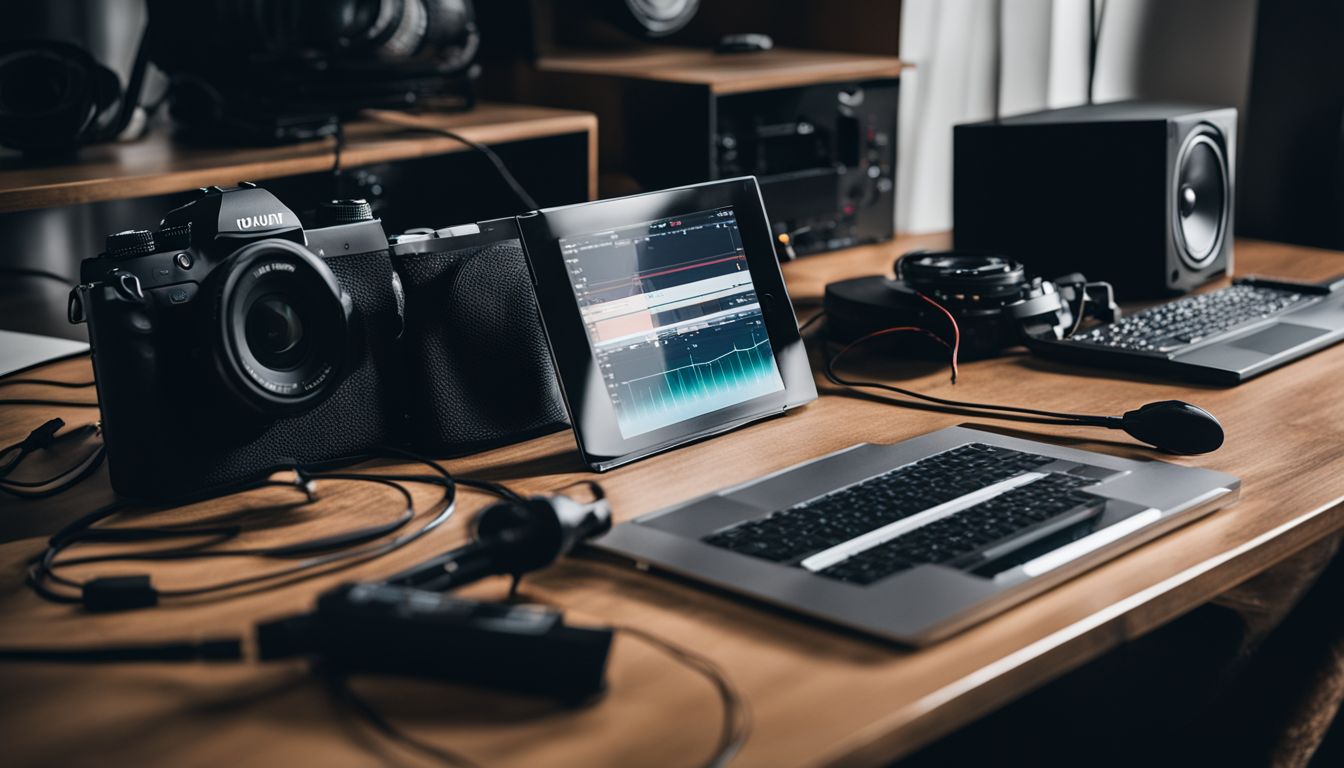 The process of authenticating audio evidence in court often relies on voice comparison standards, which are established by the American Board of Recorded Evidence. These requirements help ensure that recorded voice samples can be effectively analyzed and compared to determine their evidential value and admissibility in legal proceedings.
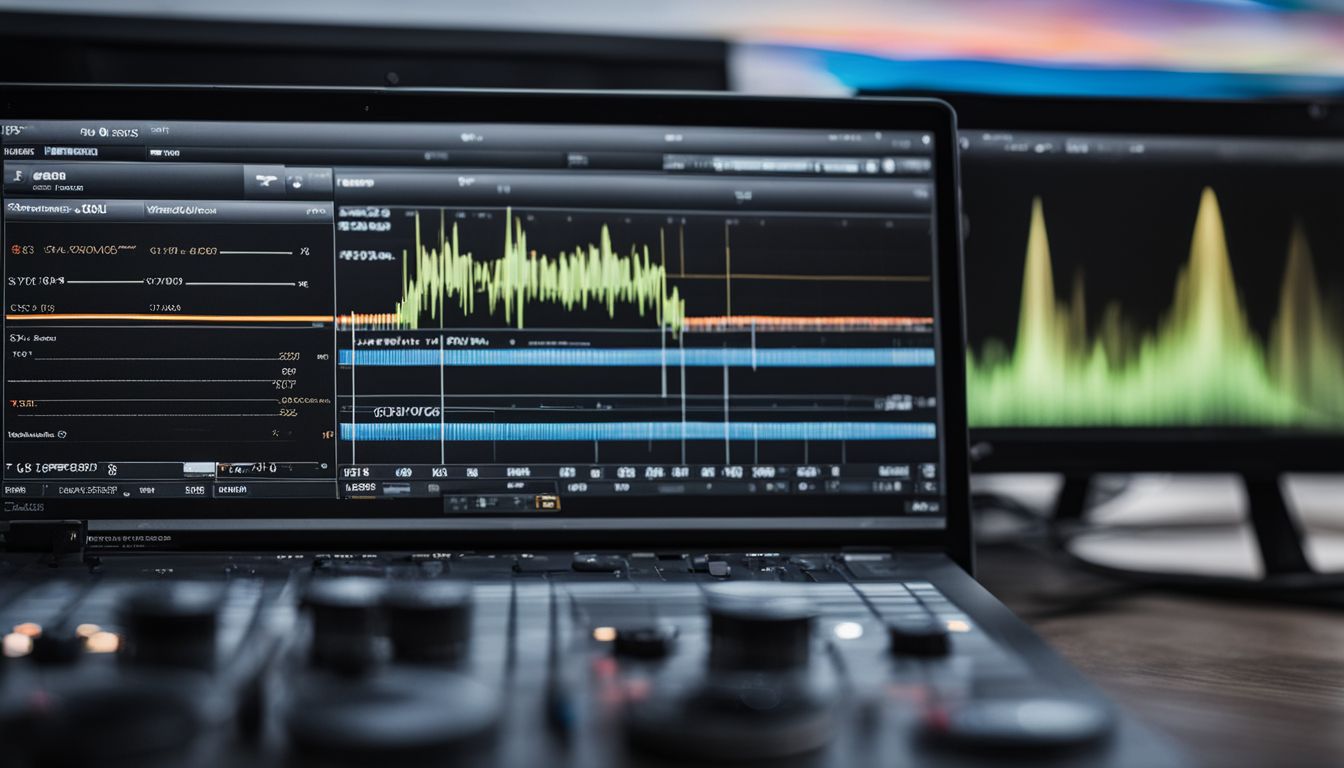 Determining the sequence of events becomes crucial in audio forensic analysis. By synchronizing audio recordings with video footage or other external time references, experts can establish a reliable timeline of events.
Read more to understand how this process helps ensure accuracy and reliability in analyzing enhanced audio evidence.
Determining the sequence of events becomes crucial in audio forensic analysis. By synchronizing audio recordings with video footage or other external time references, experts can establish a reliable timeline of events.
Read more to understand how this process helps ensure accuracy and reliability in analyzing enhanced audio evidence.
Audio Evidence Authentication for Legal Disputes
Audio evidence authentication for legal disputes requires proving that a recording is genuine, unaltered, and legally admissible by establishing a verified chain of custody and conducting forensic integrity analysis.
- Chain of Custody & Originality: Verifies that the recording file has remained secure from collection to courtroom submission without unauthorized access or modification.
- Forensic Tamper Detection: Utilizes spectrographic analysis, wave-continuity checks, and Electric Network Frequency (ENF) matching to detect concealed edits, cuts, or insertions.
- Evidentiary Admissibility: Ensures strict compliance with Federal Rules of Evidence (Rule 901) and SWGDE guidelines to satisfy judicial scrutiny in civil and criminal litigation.
Audio Evidence Authentication for Media Verification
Audio evidence authentication for media verification involves inspecting digital file metadata, signal structure, and acoustic environment consistency to confirm that media content has not been spoofed, synthetic, or artificially manipulated.
- Container & Metadata Inspection: Analyzes EXIF/header data, codec compression artifacts, and bitrates to verify the original capture device and recording software.
- Acoustic Background Consistency: Evaluates background noise floors and room impulse responses to ensure no secondary audio clips were blended into the recording.
- Synthetic & Deepfake Detection: Checks phase stability and pitch micro-fluctuations to identify AI-generated voices or manipulated audio tracks.
Authenticating Evidence Using Voice Comparison Standards
The process of authenticating audio evidence in court often relies on voice comparison standards, which are established by the American Board of Recorded Evidence. These requirements help ensure that recorded voice samples can be effectively analyzed and compared to determine their evidential value and admissibility in legal proceedings.
Requirements by the American Board of Recorded Evidence
Your audio recording is very important. There are rules set by the American Board of Recorded Evidence that we must follow.- We will keep your voice samples safe.
- These samples must be a true copy of the sound we hear.
- We will check if these sounds are real or not.
- If we change anything, we need to tell what and how we did it.
- We also have to tell why we made any changes.
- A voice expert will listen and tell if the voices match.
Audio Forensic Synchronization
Determining the sequence of events becomes crucial in audio forensic analysis. By synchronizing audio recordings with video footage or other external time references, experts can establish a reliable timeline of events.
Read more to understand how this process helps ensure accuracy and reliability in analyzing enhanced audio evidence.
Determining the Sequence of Events
People need a clear timeline when they have an audio recording that might be useful to them. Here is what we do:- We take the audio file first.
- We study it with great care.
- Tools help us tell how events took place over time.
- Audio experts use their skills to sort out sounds.
- They look for sound changes that can give hints.
- Detail is key in building a clear picture of happenings.
- If video content exists, it gives more clarity to the audio files.
- Different sources of video, like police car cameras, can give more proof of what happened in real – time.
- All this work aims to strengthen the position of your audio evidence in court.